
Last updated September 10, 2026
Full 25-point door and opener safety check with every visit - springs, cables, rollers, tracks, and your LiftMaster or Chamberlain opener included
You get a price before we start. It does not change when the truck arrives.
 Before
 After
After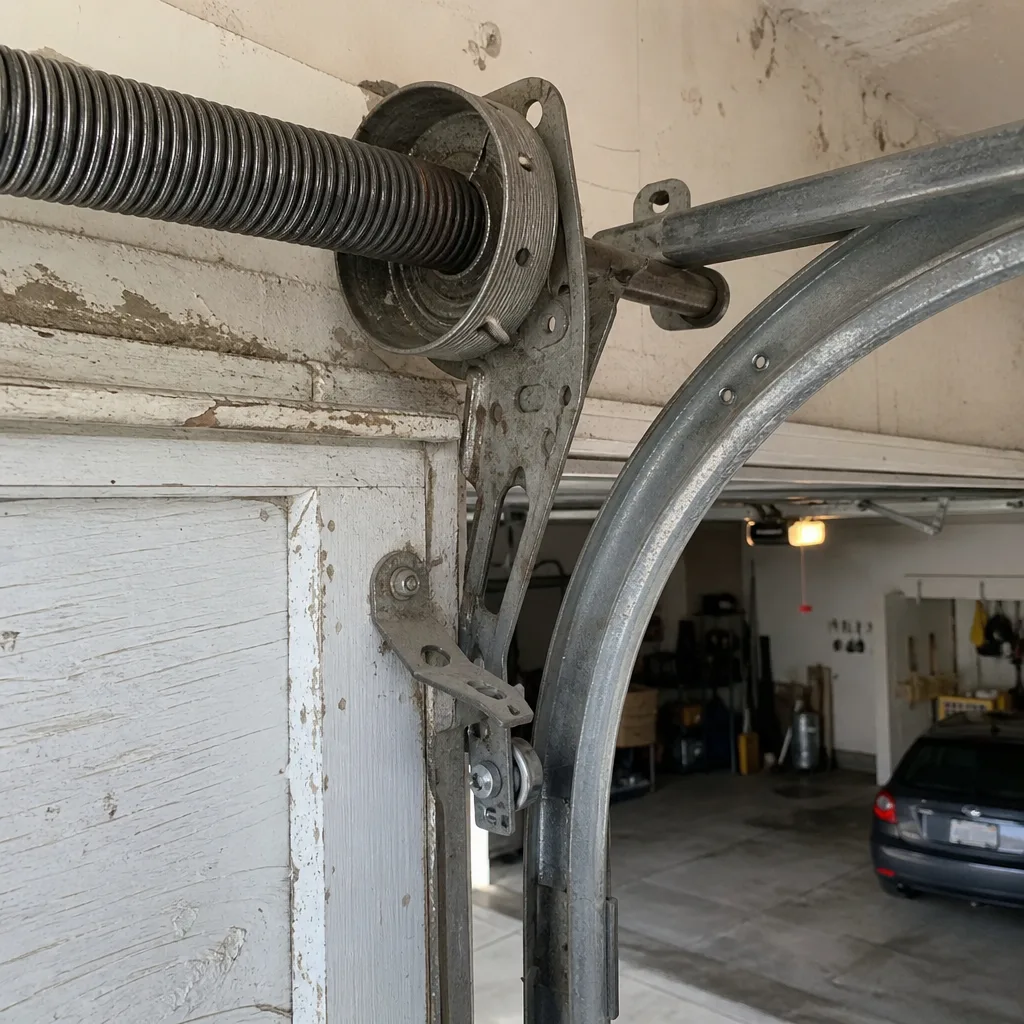 Before
 After
After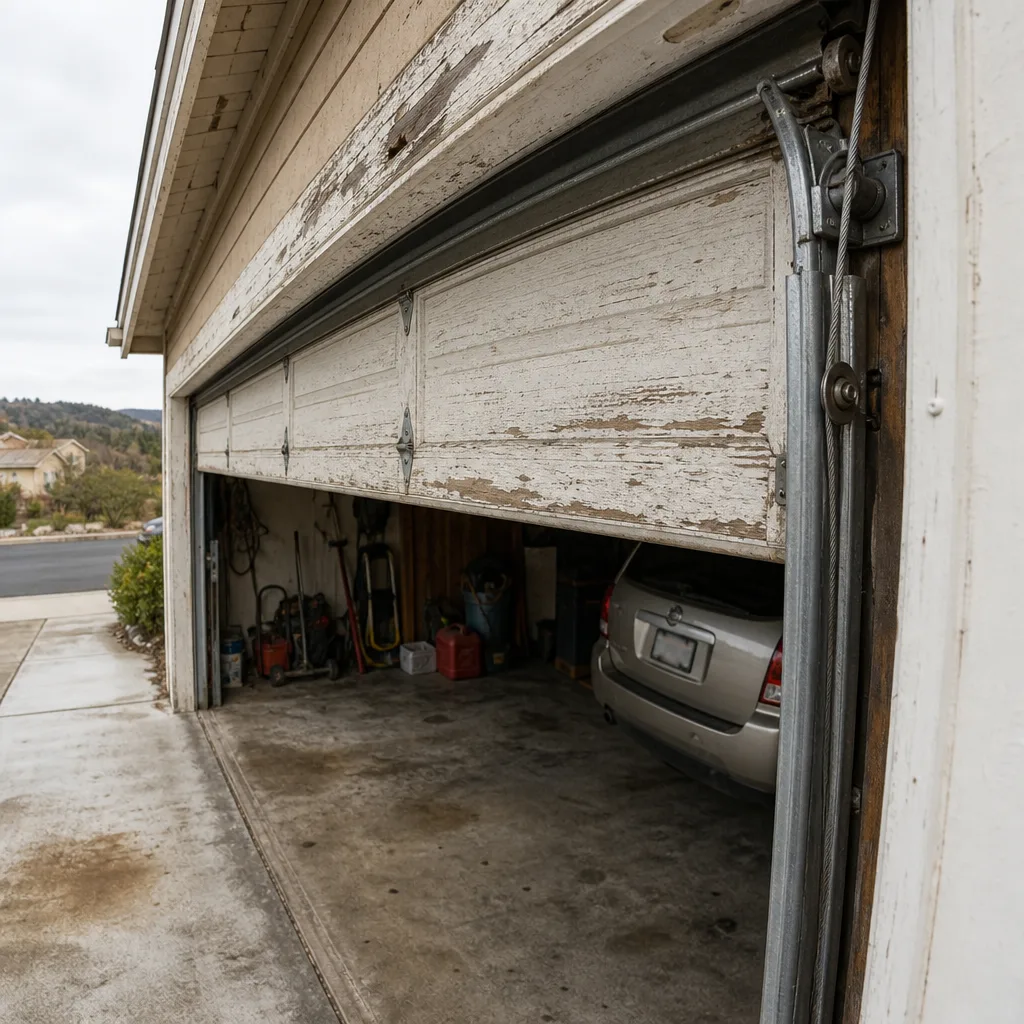 Before
 After
AfterGarage Door Warning Signs: A Jamul Homeowner’s Reference Guide
A garage door doesn’t usually break without warning. It telegraphs the problem through sound, speed, and movement for weeks before it fails - and knowing how to read those signals is the difference between a $180 repair and a $900 emergency call. Most homeowners in Jamul assume their door is fine until it won’t open at all, but in our 42 years of service, we’ve found that roughly eight out of ten major failures give clear, detectable warning signs for 30 to 90 days beforehand. The problem isn’t that the signs aren’t there. The problem is that no one taught homeowners what to look for. This guide will change that.
Quick Answer
Garage doors typically show warning signs through three categories: sound changes (grinding, popping, squealing), movement irregularities (slowing, jerking, uneven travel), and visual wear (frayed cables, gapped springs, cracked panels). Most warning signs indicate a developing problem that should be addressed within days to weeks, but certain symptoms - a broken spring, a detached cable, or a door that won’t stay open - require stopping use immediately and calling for service. In Jamul’s dry, dusty climate with temperature swings from 40°F winter mornings to 100°F summer afternoons, these warning signs often appear earlier and progress faster than they do in coastal San Diego. For a deeper look at protecting your door year-round, see our Seasonal Garage Door Care for Jamul: Year-Round Homeowner’s Guide.
Table of Contents
- Sounds Decoded: What Each Noise Means
- Visual Inspection: What to Check from a Safe Distance
- Movement Irregularities: Speed, Balance, and Binding
- How Jamul’s Climate and Terrain Affect Your Door
- The Urgency Scale: When to Stop, When to Schedule
- The Five-Minute Safety Test Every Homeowner Should Know
- Garage Door Opener Warning Signs
- A Realistic Maintenance Schedule for Jamul Homes
Sounds Decoded: What Each Noise Means
Your garage door is a mechanical system with roughly 300 moving parts, and each type of wear produces a distinct sound. Learning to match the noise to the component saves time, prevents secondary damage, and keeps you from being surprised by a repair bill.
Grinding or Rumbling
A low, continuous grinding noise during door travel usually points to worn rollers or a failing opener gear. Metal rollers that have lost their bearings grind against the track; nylon rollers crack and flatten, producing a deeper rumble. In Jamul, where dust from unpaved roads and hillside lots works into every mechanism, we’ve seen rollers deteriorate 30% faster than in coastal areas with paved driveways and less airborne grit.
If the grinding comes with visible shuddering in the door panels, the opener is likely struggling against excess weight or binding in the track. Continuing to run the opener in this condition strips the nylon gear inside the motor unit. A gear replacement on a LiftMaster or Chamberlain unit runs $150-$280; caught early, replacing the rollers costs half that.
Popping or Snapping
A sharp pop when the door starts moving, or a series of pops during travel, is the sound of a torsion spring unwinding unevenly. The spring has developed a gap between coils, or a section has begun to bind. This is not a sound to schedule for next week. A torsion spring stores enough energy to lift a 200-pound door, and when it breaks, it can damage the door, the opener, or anything in its path.
In our experience across Jamul and the surrounding backcountry, popping sounds from springs are most common in March and October, when temperature swings stress the metal. If you hear popping, stop using the door and call for service. We carry torsion springs for all standard door sizes on our trucks and can replace most in a single visit.
Squealing or Screeching
High-pitched squealing during opening or closing indicates dry or corroded hinges, rollers, or bearing plates. The sound is annoying but not immediately dangerous, which makes it easy to ignore. What happens next is that the dry hinge seizes, putting lateral stress on the door panel and track. We’ve replaced entire door sections in Jamul homes where a $12 hinge lubrication was postponed for two years.
The fix is straightforward: a proper lubrication with silicone-based spray on all pivot points. Avoid WD-40 for this; it attracts dust and turns into grinding paste in Jamul’s dry environment. Our $89 Seasonal Tune-Up includes full lubrication, spring tension check, and safety sensor alignment.
Banging or Clunking
A single loud bang, followed by a door that won’t open or slams shut, is a broken spring or detached cable. The bang is the sound of 10,000+ PSI of torque releasing instantly. If you’re inside the garage when this happens, stay clear of the door and do not attempt to lift it manually. The door weighs its full dead weight without spring assist, and the remaining cable may be unstable.
We’ve responded to emergency calls in Jamul’s rural stretches at 11 PM when a homeowner tried to force a door with a broken spring and bent the top section beyond repair. The original spring replacement would have been $220-$340. The door replacement was $1,400.
Clicking Without Movement
The opener motor hums or clicks, but the door doesn’t move. This is usually a stripped opener gear, a disconnected trolley, or - on Genie screw-drive units common in 1990s Jamul builds - a worn carriage. The clicking is the motor running against a failed mechanical connection. Running it repeatedly burns out the motor. Unplug the opener and call for service.
Visual Inspection: What to Check from a Safe Distance
You don’t need to touch anything under tension to assess your door’s condition. A monthly visual check from inside the garage, standing to one side, reveals most developing problems.
The Torsion Spring
Look at the coiled spring above the door, centered on the shaft. A healthy spring has coils that sit tightly together when the door is closed. What you’re checking for:
- A visible gap between coils. This indicates a broken section inside the spring. Even if the door still opens, the spring is compromised and will fail completely, usually within days.
- Rust or corrosion on the spring surface. Jamul’s dry climate reduces rust compared to coastal areas, but temperature swings cause condensation in uninsulated garages, particularly in winter mornings. Surface rust accelerates metal fatigue.
- Paint flaking or powdery residue. This suggests the spring has been overheating from friction, often due to inadequate lubrication.
Never attempt to touch, adjust, or remove a torsion spring. The winding cone stores lethal force. We’ve been called to homes where a homeowner used a screwdriver and a YouTube video; the ER visit cost more than ten years of professional maintenance.
The Lift Cables
These run vertically on each side of the door, from the bottom bracket to the drum at the top. Stand to the side and look for:
- Fraying or unraveling strands. Even a few broken strands indicate the cable is weakening. A failed cable lets the door drop unevenly, which can twist the door in the track or cause it to fall.
- Kinking or flat spots. The cable should run straight and round. Kinks happen when a door is operated with a broken spring and the cable slips off the drum.
- Corrosion or greenish patina. Less common in Jamul than near the coast, but garage moisture from irrigation runoff or poor drainage can cause it.
The Rollers and Hinges
With the door closed, examine the rollers in the vertical track. Nylon rollers should be intact, not cracked or flattened. Steel rollers should turn freely, not wobble in their brackets. Hinges should sit flat against the door panel, not twisted or pulled away at the bolts.
In Jamul’s dust-heavy environment, we’ve noticed a pattern: homes on unpaved roads or with long gravel driveways see roller wear concentrated on the bottom rollers, which collect the most grit. If your bottom rollers look worse than the top ones, that’s normal for your location, but it also means they need attention sooner.
The Door Panels
Look across the face of the closed door for:
- Separation at panel joints. Steel doors can separate at the seams where sections meet, allowing water intrusion and weakening the structure.
- Dents or creases that have worsened. A small dent from a basketball is cosmetic. A crease that has deepened suggests the panel is fatiguing and may fail at the hinge attachment.
- White powder or staining on wood doors. Indicates moisture absorption and rot beneath the surface. Jamul’s occasional heavy winter rains, followed by dry heat, stress wood doors more than consistently dry or wet climates.
Movement Irregularities: Speed, Balance, and Binding
A properly functioning door moves smoothly at consistent speed, stops evenly at the top and bottom, and stays in place if released halfway. Deviations from this pattern indicate specific problems.
Slow Opening or Closing
If the door has gradually slowed over months, the springs are weakening. The opener is doing more of the lifting work, which strains the motor and wears the gear. On a standard 16-foot door, opening should take 12-15 seconds. If it’s taking 20+ seconds, the springs have lost significant tension.
Sudden slowing, by contrast, usually means a binding track, damaged roller, or obstruction. Check the track for dents or debris before calling for service. We’ve found everything from rat nests to displaced landscape rocks in Jamul garage door tracks.
Uneven Travel or One Side Lower
A door that travels crooked, or finishes with one corner lower than the other, has a problem with the lift system. Most commonly:
- A failing spring on one side. Torsion springs on a single-shaft system should lift evenly; if one is weakening, that side lags.
- A cable that has slipped on the drum. The drum at the top of the track has grooves that seat the cable. If the cable slips out of groove, that side loses lift length.
- A damaged bottom bracket or roller on one side. The door binds and tilts toward the damaged side.
Operating a crooked door bends the track and damages the panels. Stop using it immediately.
Door Won’t Stay Open or Slams Shut
A door that drifts down from the open position, or closes with excessive speed, has insufficient spring tension. The springs are fully fatigued or broken. This is an immediate stop-use situation. The door is dangerous to operate and will damage the opener if forced.
In Jamul’s canyon and hillside homes, this symptom sometimes appears seasonally: spring tension that’s adequate in cool weather becomes insufficient when metal contracts in cold winter mornings. If your door behaves differently in January than in July, the springs are at the edge of their capacity and need adjustment or replacement.
Reversing Before Closing Fully
The door starts down, then reverses to open. This is usually the safety sensor system, not a mechanical failure. Check that:
- Both sensor LEDs are lit (one amber, one green on most systems)
- No object blocks the beam between sensors
- Sensors are aligned and not knocked askew
However, if the door reverses with excessive force or only reverses intermittently, the close-force setting on the opener may be misadjusted, or the door may be binding and triggering the obstruction response. A door that should move easily is meeting resistance somewhere.
How Jamul’s Climate and Terrain Affect Your Door
Garage door advice written for national audiences misses the conditions that actually wear out doors in eastern San Diego County. For a comprehensive local overview, read The Complete Guide to Garage Door in Jamul. Jamul’s environment creates specific failure patterns we’ve documented across thousands of service calls.
Dust and Grit Acceleration
Jamul’s combination of dry climate, unpaved roads in many neighborhoods, and Santa Ana wind events produces fine dust that infiltrates every mechanism. We’ve opened roller brackets in Jamul homes to find them packed with compacted dust that acts like sandpaper on the roller stem. This wear pattern is rare in coastal Encinitas or Del Mar, where humidity and paved surfaces keep mechanisms cleaner.
The practical effect: rollers and hinges that might last 8-10 years in other San Diego communities often need attention at 5-7 years in Jamul. Our $89 Seasonal Tune-Up includes full cleaning and lubrication, which extends component life significantly.
Temperature Swing Stress
Jamul sees wider daily and seasonal temperature swings than coastal San Diego. A January morning can start at 38°F and reach 72°F by afternoon. Summer days hit 100°F while nights drop to 65°F. Metal springs expand and contract with each cycle, and the cumulative fatigue is real. We’ve measured spring life reduction of 15-20% in inland versus coastal environments.
For homeowners in Jamul’s higher elevations, near Lawson Valley or the Steele Canyon area, this effect is more pronounced. If your garage is uninsulated and faces afternoon sun, your springs are working harder than the same specification in a shaded, temperate garage.
Road Vibration from Unpaved Driveways
Homes with long gravel or dirt driveways, common in Jamul’s more rural properties, transmit vibration through the structure. Over years, this loosens track mounting hardware, shifts sensor alignment, and fatigues door panel connections. We’ve found track bolts that have worked completely loose, allowing the vertical track to tilt and bind the door.
A quarterly check of track mounting bolts, visible from inside the garage with a flashlight, catches this early. Tighten any loose bolts with a socket wrench, but do not adjust track alignment yourself - improper spacing causes binding and roller damage.
Wildlife Intrusion
Jamul’s interface with open land means rodents, pack rats, and occasionally snakes seek shelter in garages. We’ve found chewed wires on opener safety sensors, nests in motor housings, and track obstructions from stored acorns. If your door behaves erratically and you hear scratching from the opener housing, investigate carefully or call for service.
The Urgency Scale: When to Stop, When to Schedule
Not every warning sign demands the same response. This scale helps you decide whether to call today, schedule this week, or monitor and plan.
Immediate Stop-Use: Call Today
- Broken spring (visible gap, loud bang, door won’t stay open)
- Detached or frayed lift cable
- Door that slams shut or drops when released
- Visible damage to door panels that affects structural integrity
- Opener that runs but door doesn’t move (stripped gear or disconnected hardware)
Continuing to operate the door in these conditions risks personal injury, property damage, and cascading repairs that multiply the cost.
Schedule Within the Week
- Popping or snapping sounds from the spring area
- Door that has slowed noticeably in opening speed
- Uneven travel or one side lagging
- Rollers that wobble, grind, or no longer turn
- Opener that strains or overheats
These conditions will worsen. A week’s delay typically doesn’t cause catastrophic damage, but two months of delay often does.
Plan and Monitor: Address Within 30 Days
- Intermittent squeaking that resolves with lubrication
- Minor surface rust on springs or hardware
- Cosmetic panel damage that doesn’t affect operation
- Remote or keypad inconsistency (likely battery or signal interference)
These are maintenance items, not emergencies. Schedule during regular business hours, take advantage of our standing offers, and avoid the after-hours premium.
The Five-Minute Safety Test Every Homeowner Should Know
This test, which we teach every Jamul customer, assesses whether your door is safe to operate before a technician arrives. It takes five minutes and requires no tools. Perform it monthly, and absolutely before calling for service, so you can describe the symptoms accurately.
Step 1: Visual Static Check (1 minute)
With the door closed, stand inside the garage and look at the torsion spring, cables, rollers, and hinges from a safe distance. Note anything that looks different from last month: new gaps, fresh rust, fraying, or changes in roller position. Take a phone photo for comparison next month.
Step 2: Balance Test (2 minutes)
Close the door and disconnect the opener by pulling the red emergency release cord. The door should now move freely by hand. Lift it to waist height and release. A properly balanced door stays in place or drifts slowly. If it falls rapidly or shoots upward, the spring tension is wrong. Do not reconnect the opener. The motor will fight the imbalance and fail prematurely.
Safety note: If the door is extremely heavy and you cannot lift it manually, the spring is likely broken. Do not force it. This is the stop-use signal.
Step 3: Travel Smoothness Test (1 minute)
With the opener still disconnected, raise and lower the door by hand through its full travel. It should move with consistent, moderate effort, no binding or catching. Note any points where it sticks, grinds, or requires extra force. These indicate track misalignment, damaged rollers, or panel binding.
Step 4: Auto-Reverse Test (1 minute)
Reconnect the opener. Place a 2×4 board flat on the floor in the door’s path. Close the door using the wall button. When the door contacts the board, it should reverse immediately. If it doesn’t, or if it crushes the board, the close-force setting is dangerous and needs adjustment. Federal law (UL 325) requires this function; a failed test is a safety hazard, particularly for homes with children or pets.
Document your results. When you call Garage Door Repair in Jamul, specific observations (“fails balance test, falls from waist height”) let us dispatch the right technician with the right parts, often completing the repair in a single visit.
Garage Door Opener Warning Signs
The opener is often blamed for door problems that originate in the door itself, but openers do fail independently. These are the opener-specific warning signs to recognize.
Straining or Overheating Motor
An opener that labors, slows, or smells hot during operation is working too hard. The cause is usually a door problem - weak springs, binding track, or damaged rollers - but the motor suffers the consequence. Continued operation burns out the motor or strips the drive gear. A replacement opener installation runs $450-$750 for a quality unit; fixing the underlying door problem costs less and preserves the opener.
We’ve replaced openers in Jamul homes where the real problem was a $220 spring adjustment. The homeowner paid for both because the symptoms weren’t decoded correctly. Garage Door Opener in Jamul service from Mainspring includes full door system diagnosis, not just opener replacement.
Intermittent Remote or Wall Button Response
If the opener responds sometimes but not others, check the simplest causes first: remote battery, LED bulb interference (some bulbs disrupt radio frequency), and range. If these don’t resolve it, the logic board may be failing. On older Chamberlain and LiftMaster units from the 2000s, we’ve seen capacitor failure cause exactly this pattern. The opener works fine when cool, fails when warm, then recovers. A logic board replacement is $180-$280; a new opener with modern safety features and battery backup may be the better value.
Excessive Noise from the Motor Unit
A chain-drive opener that has become louder over time usually needs lubrication and tension adjustment. A belt-drive or screw-drive unit that develops new noise has internal wear. Genie screw-drive openers, popular in Jamul’s 1990s construction, use a carriage that travels along a threaded steel rod. When the carriage wears, it chatters and slips. The carriage is replaceable, but if the screw itself is worn, full opener replacement is more reliable.
No Lights or Dim Display
Opener logic boards have transformer circuits that fail with age. If the wall control is dim or the opener lights don’t work even with new bulbs, the internal power supply is degrading. This precedes total failure by weeks or months. Schedule replacement before you’re stuck with a door that won’t open.
A Realistic Maintenance Schedule for Jamul Homes
Generic maintenance schedules assume moderate climate and paved surroundings. Here’s what actually makes sense for Jamul.
Monthly (5 minutes)
- Run the five-minute safety test above
- Visual inspection of spring, cables, rollers from safe distance
- Check and tighten visible track mounting bolts
Quarterly (15 minutes)
- Lubricate hinges, rollers, and bearing plates with silicone spray
- Clean dust from opener motor housing and safety sensors
- Test remote batteries and keypad function
Annually (professional service)
Schedule our Garage Door Installation in Jamul and maintenance team for the $89 Seasonal Tune-Up. This includes:
- Spring tension adjustment or replacement assessment
- Full lubrication of all moving parts
- Cable and roller condition evaluation
- Track alignment check and adjustment
- Opener force setting verification and safety sensor alignment
- Written condition report with photo documentation
For homes on unpaved roads or with uninsulated garages facing afternoon sun, consider twice-yearly service. The cost of preventive maintenance is consistently lower than emergency repairs, and it eliminates the inconvenience of a door that won’t open when you’re leaving for an appointment.
Common Mistakes to Avoid
- Ignoring a sound because “it’s always made that noise.” Doors don’t naturally get louder with age. New noise is wear, and wear progresses. The homeowner who told us their door “always squeaked” had a hinge that had seized completely, bending the door panel beyond repair.
- Applying WD-40 to garage door components. WD-40 is a solvent, not a lubricant, and it attracts dust. In Jamul’s dusty environment, it creates abrasive paste that destroys rollers and hinges. Use silicone-based spray designed for garage doors.
- Attempting spring or cable work after watching online videos. Torsion springs store lethal energy. We’ve been called to homes where a homeowner’s “simple” adjustment resulted in a broken wrist or worse. This work requires specialized tools and training.
- Replacing the opener when the door is the real problem. A new opener on a door with weak springs or binding track will fail the same way the old one did. Always diagnose the full system before replacing components.
- Waiting for “both springs to break” before replacing. Torsion springs are installed in matched pairs. When one breaks, the other has identical cycle life and is near failure. Replace both, or you’ll pay a second service call within months.
- Neglecting maintenance on a “new” door. Even a Clopay or Amarr door installed last year needs annual lubrication and adjustment. Warranty coverage doesn’t eliminate maintenance requirements.
- Calling the cheapest bid without verifying credentials. In Jamul’s spread-out service area, some operators quote low, then charge for “additional problems” discovered on arrival. Verify license, insurance, and written warranty before booking.
When to Call a Professional
Call when you detect any immediate-stop symptom: broken spring, detached cable, door that won’t stay open, or opener that runs without moving the door. Call when you cannot confidently complete the five-minute safety test, or when the door fails any portion of it. Call when warning signs multiply - a grinding sound plus slow travel plus uneven closing indicates multiple component wear that will cascade into failure.
Mainspring Garage Door Co. offers free estimates in Jamul. A technician arrives with a fully stocked truck, assesses your door system completely, and states the flat price before any work begins. Most repairs are completed in a single visit. Our 90-Day Done Right Promise covers every job in writing: if it’s not right, we return at no charge, with no dispute process. Call (619) 333-5822 to schedule, or for 24/7 emergency response when a failure can’t wait.
Frequently Asked Questions
Most common repairs in Jamul range from $180 for roller or hinge replacement to $340 for spring replacement on a standard two-car door. Opener repairs run $150-$280; full opener replacement with a quality LiftMaster or Chamberlain unit is $450-$750. We state the exact price before starting work, and our $50 Off Any Repair Over $250 offer applies to most spring and opener jobs. Call (619) 333-5822 for a free estimate with no obligation.
No. A garage door with a broken spring weighs its full dead weight, typically 150-250 pounds, and is dangerous to lift manually. The remaining cable and hardware are under unbalanced stress and may fail without warning. Disconnect the opener by pulling the red emergency release cord, leave the door closed, and call for service. We carry springs for all standard sizes and complete most replacements same-day.
Metal contracts in cold temperatures, increasing friction in hinges, rollers, and springs. In Jamul, where winter mornings can drop to the high 30s, this effect is noticeable. Lubrication that was adequate at 70°F becomes insufficient at 40°F. Annual maintenance before winter prevents this. If your door is significantly louder in January than July, the components are at the edge of their service life and need attention.
A quality steel door from Clopay or Amarr should last 20-30 years with proper maintenance. However, in Jamul’s dust-heavy environment with temperature swings, the moving components - springs, rollers, cables, opener - typically need attention every 7-10 years. Homes on unpaved roads or with uninsulated garages may see 5-7 year component life. Regular maintenance extends this significantly; we’ve serviced 25-year-old doors that still operate smoothly because the homeowner scheduled annual tune-ups.
No. Mainspring states the flat price before any work begins, and that price does not change unless you authorize additional work. We do not charge “diagnostic fees” that get waived if you approve the repair. The estimate you agree to is the amount on the invoice. This is part of our no-surprises commitment, and it’s why homeowners who have been burned by other contractors specifically seek us out.
Yes. Our technicians arrive with torsion springs, extension springs, cables, rollers, hinges, bearings, and opener components for all major brands including LiftMaster, Chamberlain, Genie, Clopay, and Amarr. Most repairs are completed in a single visit, with no waiting for parts and no second trip charge. If your door is an unusual size or custom configuration, we identify this during the scheduling call and bring the correct components.
The Bottom Line
Your garage door communicates its condition constantly through sound, movement, and visible wear. The homeowners who avoid emergency repairs are the ones who learned to read these signals and act before failure. In Jamul’s demanding climate, this skill is especially valuable: dust, temperature swings, and rural terrain accelerate wear that coastal homeowners never see.
Run the five-minute test monthly. Address warning signs at the appropriate urgency level. Schedule annual professional maintenance. And when you need service, choose a provider who states the price upfront, carries the parts to finish in one visit, and stands behind the work in writing. That’s the standard we’ve kept at Mainspring for 42 years.
Written by Carl Dutton, Owner at Mainspring Garage Door Co., serving Jamul since 2016.