
Last updated September 10, 2026
Full 25-point door and opener safety check with every visit - springs, cables, rollers, tracks, and your LiftMaster or Chamberlain opener included
You get a price before we start. It does not change when the truck arrives.
 Before
 After
After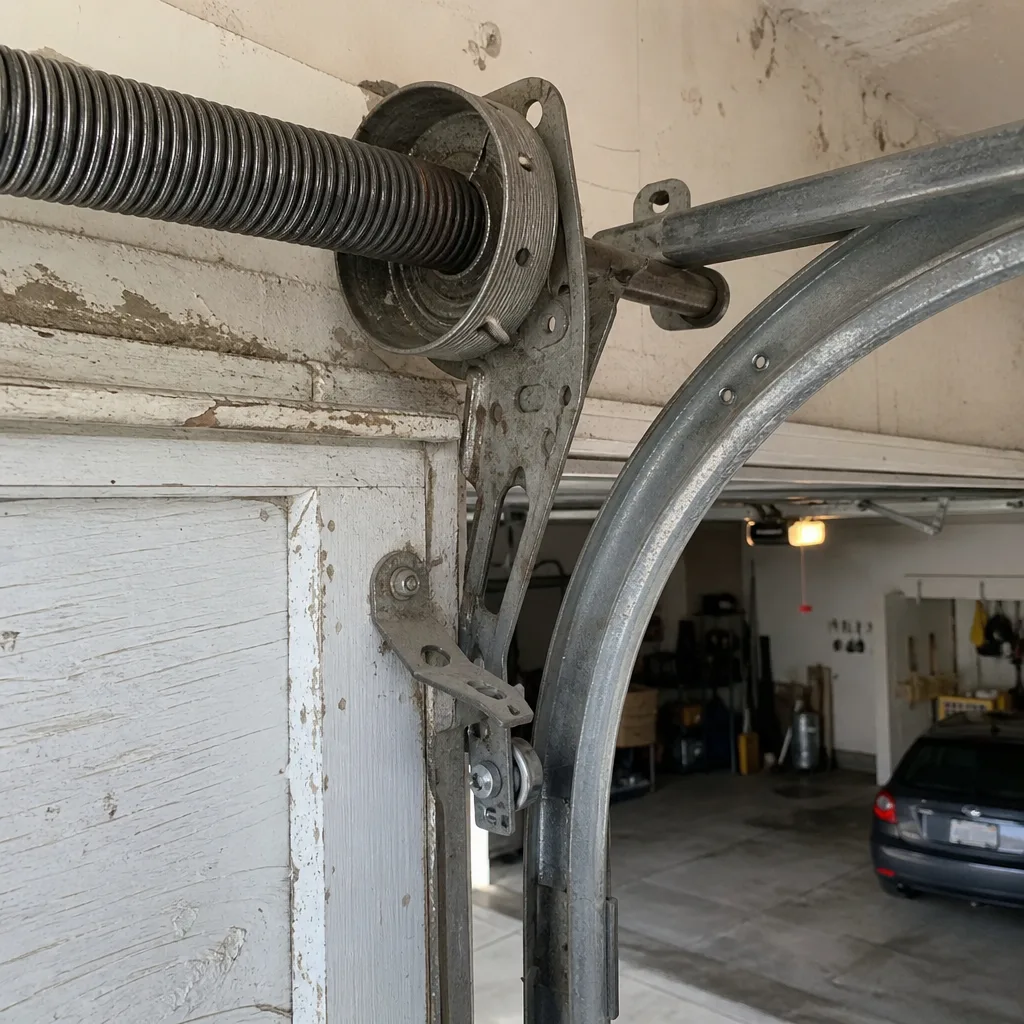 Before
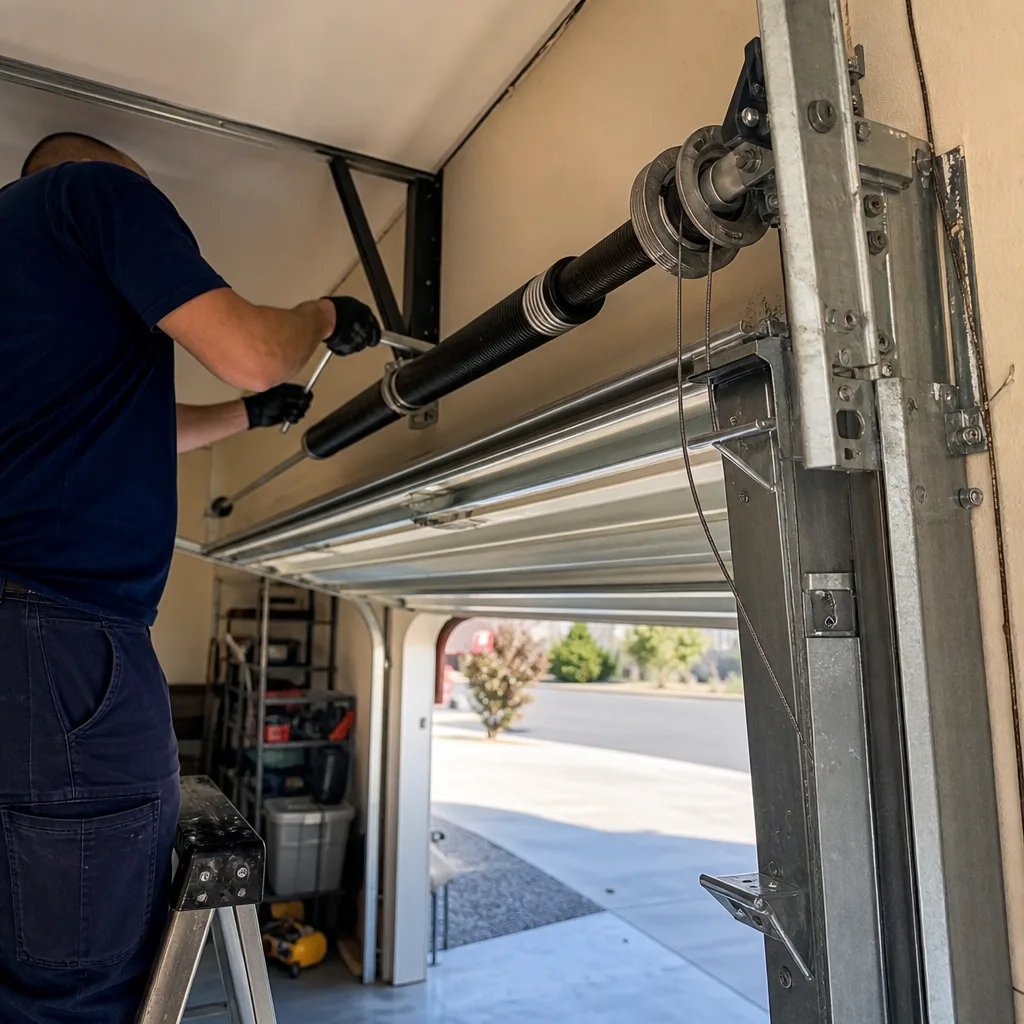 After
After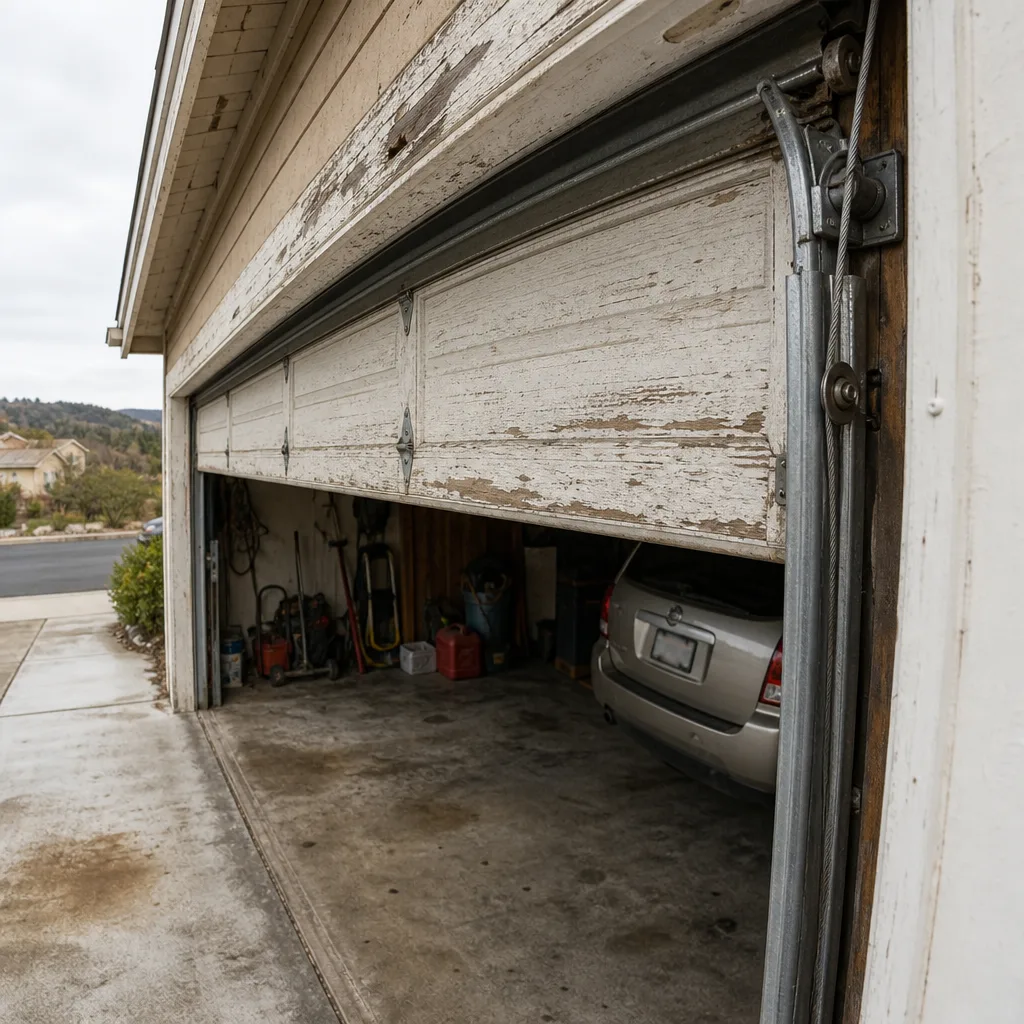 Before
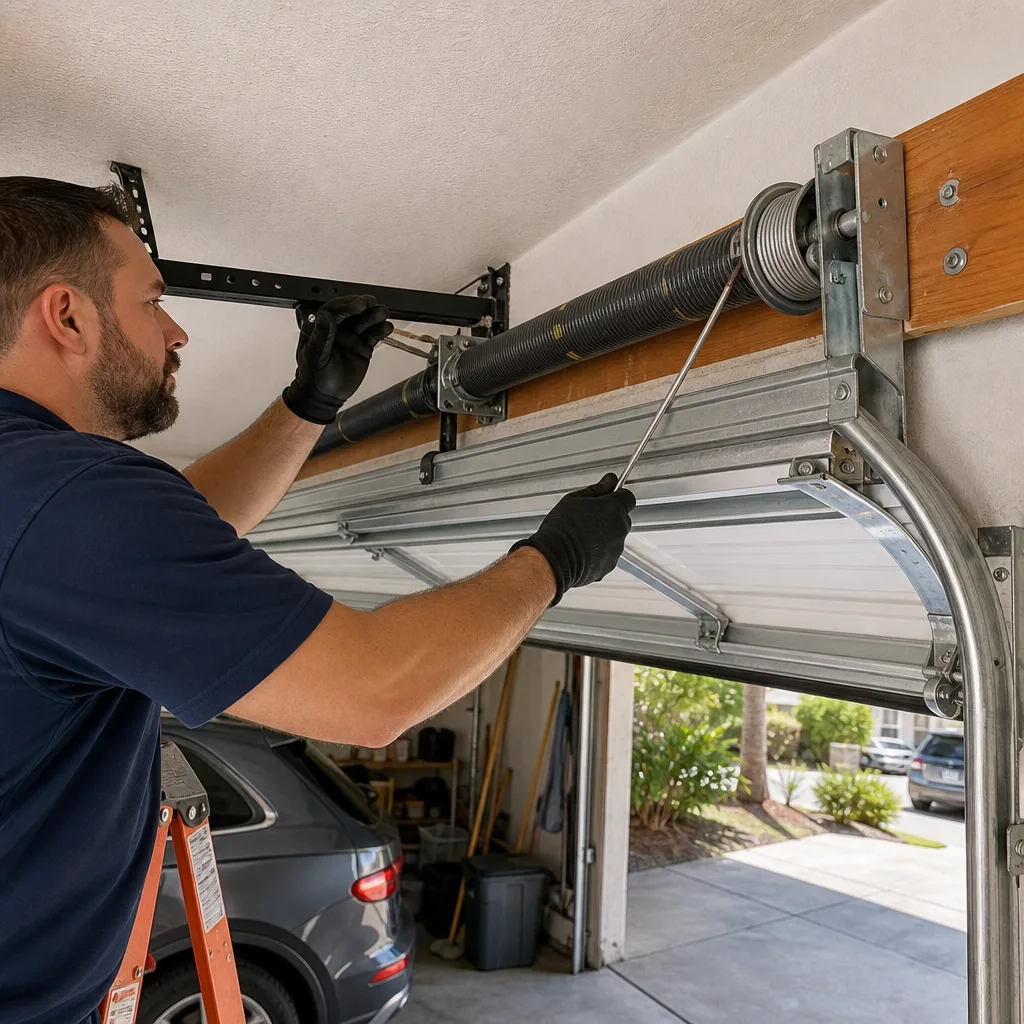 After
AfterSeasonal Garage Door Care for Jamul: Year-Round Homeowner’s Guide
Most garage door maintenance guides tell you to “winterize” your door. That advice was written for Minneapolis. In Jamul, the threats aren’t blizzards - they’re Santa Ana winds carrying embers through canyon gaps, eight-month dry spells that turn rubber seals brittle, and summer heat that pushes south-facing panels past their expansion tolerance. We’ve been called to homes in Garage Door Repair in Jamul where a door that worked perfectly in March refused to close in August because the metal had grown, the opener had overheated, or a dried-out bottom seal finally cracked on the first rainy day in November. This guide replaces the four-season calendar with the actual rhythm of East County San Diego: fire season prep, the brief wet window, the long dry stretch, and peak heat. You’ll learn what to check, when to check it, and which tasks are worth doing yourself versus calling in a pro.
Quick Answer
Jamul garage doors need four seasonal maintenance checks aligned to local climate stressors, not calendar seasons: pre-fire-season debris clearing and seal inspection (April-May), post-dry-season weatherproofing before first rains (October-November), summer heat monitoring for panel expansion and opener thermal issues (July-September), and rust prevention during the brief wet window (December-February). Most homeowners can handle visual inspection, lubrication, and debris clearing; spring tension adjustments, cable replacement, and opener electrical work require a trained technician. For a deeper look at when to DIY and when to call in help, see our DIY vs Professional Garage Door: The Jamul Homeowner’s Decision Guide.
Table of Contents
- Pre-Fire-Season: What to Do Before the Santa Anas Arrive
- Post-Dry-Season: Preparing for Jamul’s First Rain
- Summer Heat: South-Facing and Canyon Microclimate Stress
- The Brief Wet Window: Rust and Moisture Defense
- Your One-Page Jamul Seasonal Task Calendar
- What You Can Handle vs. What Requires a Pro
- Common Mistakes to Avoid
- When to Call a Professional
- Frequently Asked Questions
Pre-Fire-Season: What to Do Before the Santa Anas Arrive
Jamul’s fire season typically runs May through October, with Santa Ana wind events most dangerous in September and October. These aren’t gentle breezes. We’ve measured sustained 40-mph gusts in the Lyons Valley corridor with embers traveling a quarter mile or more. Your garage door is the largest opening in your home’s envelope, and if the seal system is compromised, embers and hot gases enter the structure through gaps you can’t see until you’re looking for them.
Here’s what we check on every pre-fire-season service call in Jamul:
- Bottom seal integrity. The rubber or vinyl seal along the door’s bottom edge hardens and cracks during our long dry season. A cracked seal doesn’t just let dust in - it creates a direct pathway for embers. Run your hand along the seal; if you feel cracks, flat spots, or areas that no longer spring back, replace it. This is a $15 part and twenty minutes with a helper.
- Perimeter weatherstrip on the frame. The flexible strip where the door meets the jambs and header dries out faster in Jamul than in coastal San Diego. Look for gaps wider than a nickel when the door is closed. In fire-prone areas like the San Diego Country Estates and Rancho Jamul Estates, we recommend ember-blocking weatherstrip rated for 1-hour fire exposure. Standard vinyl weatherstrip degrades in eighteen months here.
- Track channel debris clearing. Dry leaves, foxtails, and rodent nesting material accumulate in the horizontal track sections, especially on doors that face prevailing winds. This material is fuel. Remove the debris with a vacuum and inspect for rust spots that started during the previous wet season.
- Opener force settings. Santa Ana winds create backpressure against the door when it’s closing. If your opener’s down-force is set too low, the door reverses repeatedly during wind events. If set too high, the door won’t reverse on an obstruction - a safety hazard. Test with a 2×4 laid flat; the door should reverse on contact. Adjustments vary by opener brand: Chamberlain and LiftMaster units have force dials on the motor housing, Genie units use limit screws. Consult your manual, or call us if the label is faded.
In the Steele Canyon and Lawson Valley areas, where homes sit deeper in canyon draws, we see more rodent activity in garages during pre-fire-season clearing. Mice pull weatherstrip material for nesting. Check the lower corners of the door specifically - that’s where they start.
One task that’s often missed: verify your garage door is included in your home’s defensible space plan. Cal Fire’s Zone 0 guidance extends to the door surface. A wood door with peeling finish or a steel door with rust spots can ignite from radiant heat alone. Sand and touch up before the heat peaks.
Post-Dry-Season: Preparing for Jamul’s First Rain
Jamul averages fourteen inches of rain annually, and most of it arrives in just twelve to fifteen days between November and March. The first significant rain - often in late October or early November - exposes every maintenance item that was deferred during the eight-month dry spell. We’ve taken calls from homeowners in Jamul who report “the door worked fine all summer” and suddenly won’t seal, makes new noise, or shows water staining on the interior panel the first wet morning. For what these repairs typically cost, check our Garage Door Cost Breakdown: The Jamul Homeowner’s Reference for 2026.
The dry season does specific damage here that coastal homeowners don’t experience:
- Rubber seals become compression-set. When a seal sits compressed against concrete for months without moisture, it loses its memory. The first rain hits, and water runs under the flat spot rather than being deflected.
- Track lubricant turns to varnish. The light oil or silicone spray applied in spring attracts dust through summer. By October it’s a gritty paste that hardens in cool weather, increasing opener strain and causing the trolley to stutter.
- Drainage channels at the door base clog. Jamul’s decomposed granite soil sheds water quickly, but concrete aprons often have low spots right at the door threshold. If the drainage path is blocked by hardened soil or seal fragments, water pools and wicks into the bottom panel.
Your post-dry-season inspection should happen in mid-October, before the first Pacific storm track dips south. Here’s the sequence we use:
- Close the door and examine the bottom seal with a flashlight from inside. Look for daylight - any visible gap is a leak path.
- Open the door halfway and check the vertical tracks for rust bloom, especially at the lower six inches where condensation collects overnight.
- Operate the door manually (disconnect the opener per manufacturer instructions). It should move smoothly through the full travel. Binding at any point indicates a lubrication or alignment issue that rain will worsen.
- Inspect the bottom panel’s interior face for water stains from previous seasons. Staining near the corners suggests seal failure; staining across the full width suggests threshold drainage problems.
For homes on the north-facing slopes toward Proctor Valley, the first rain often comes with fog that lingers until midday. This extended moisture exposure accelerates rust on torsion spring hardware. A light coat of lithium grease on the spring cones and cable drums - not the spring itself - prevents surface corrosion without attracting dust.
Wood doors, still common in the older Jamul ranch properties, need particular attention. Check the bottom edge with a screwdriver probe (gentle pressure). Soft wood indicates prior water intrusion and likely internal rot. We’ve replaced bottom sections on twenty-year-old Clopay wood doors where the interior frame had turned to pulp while the exterior still looked presentable.
Summer Heat: South-Facing and Canyon Microclimate Stress
July through September in Jamul isn’t just warm - it’s thermally aggressive on garage door systems. South-facing doors in the San Diego Country Estates reach surface temperatures exceeding 150°F by mid-afternoon. West-facing doors on homes above Lyons Valley Road catch the full afternoon sun plus reflected heat from driveways. The effects aren’t cosmetic; they’re mechanical and electrical.
Panel expansion and binding. Steel garage doors expand approximately 0.006 inches per foot per 100°F temperature rise. A 16-foot door in Jamul summer conditions can grow nearly 1/8 inch in width. This doesn’t sound significant until you consider that the track clearance is typically 1/4 to 3/8 inch per side. Add dust in the tracks, a slightly misaligned roller, or a warped section from a previous impact, and the expanded panel binds against the track. The opener strains, the motor overheats, and the safety reverse may trigger erratically.
We’ve found this most often on dark-colored doors in the Rancho Jamul and Campo Road areas. If your door is black, dark brown, or forest green and faces south or west, listen for a rhythmic scraping sound during mid-day operation. That’s the expanded panel contacting the track. The fix is usually track realignment and roller replacement, not panel replacement - but operating a binding door through summer accelerates wear on every component.
Spring tension shifts. Torsion springs are calibrated to a specific door weight at installation temperature, typically 60-70°F. In Jamul summer heat, the metal expands slightly and the spring rate decreases. A properly balanced door in March may creep downward from the open position in August, or require more opener force to lift. This isn’t a failure - it’s physics. But if the door was already at the edge of balance specification, summer heat pushes it over. An out-of-balance door strains the opener and creates safety risks if the emergency release is used.
Opener thermal protection. Garage ambient temperatures in uninsulated Jamul garages regularly exceed 110°F in summer. Most residential openers - including LiftMaster and Chamberlain chain-drive units - have thermal cutout switches that shut the motor at internal temperatures around 130°F. The motor housing, already warm from operation, sits in 110°F air with no ventilation. We’ve responded to calls where the opener worked at 8 AM and quit entirely by 2 PM, only to function again after sunset. The homeowner assumed electrical failure; it was thermal protection doing its job, but doing it too often indicates the opener is undersized for the thermal environment or nearing end of life.
Summer maintenance tasks for Jamul:
- Test door balance monthly during July-September. Disconnect the opener and lift manually to waist height. The door should stay, not rise or fall. If it moves, spring adjustment is needed.
- Keep the garage ventilated. A simple gable vent or powered exhaust fan reduces ambient temperature 15-20°F and extends opener life significantly.
- Inspect rollers for flat spots or bearing seizure. Binding rollers generate friction heat, compounding the thermal load.
- Consider reflective film or a light-colored door if replacement is planned. Garage Door Installation in Jamul should account for solar orientation - we spec lighter colors and insulated panels for south and west exposures.
The Brief Wet Window: Rust and Moisture Defense
Jamul’s rainy season is short but concentrated. December through February brings the bulk of annual precipitation, often in multi-day storms with overnight temperatures dipping into the 40s. This combination - moisture plus temperature fluctuation - creates condensation cycles that accelerate corrosion on metal components.
The specific corrosion risks in Jamul differ from wetter climates because of the long dry interval that precedes the wet season. Protective coatings that might have worn thin in March have eight months to degrade completely. The first rain hits bare metal.
Torsion spring corrosion points. The spring itself is oil-tempered steel and resists surface rust well, but the cones at each end - where the spring mounts to the shaft and the center bracket - are cast iron or mild steel. These collect condensation because they’re thermal masses that stay cooler than surrounding air overnight. We’ve replaced springs in Jamul where the cone fractured not from cycle fatigue, but from corrosion weakening the mounting bore. The spring was fine; the hardware failed.
Inspect the cones and the stationary cone’s set screws with a flashlight during January. Surface rust is normal; pitting or flaking indicates replacement need. Do not attempt to remove or adjust the spring - the stored energy is dangerous and requires proper winding bars and training. This is professional work.
Cable drum and bottom bracket rust. The lift cables run over aluminum or cast-iron drums at the top of the door, then down to the bottom brackets. Water running down the cable - from a leaking seal, from condensation on the upper track, or from roof gutter overflow - pools in the bottom bracket. In Jamul’s older homes, particularly in the original Jamul village area, we’ve found bottom brackets where the cable attachment pin had corroded to half its original diameter. A cable failure under load is violent and unpredictable.
Wood door moisture checks. If your home has a wood door, the brief wet window is when hidden problems surface. Check the bottom panel’s exterior face for finish failure - peeling, chalking, or bare wood. Check the interior face for discoloration or mildew smell. The panel construction on many wood doors uses finger-jointed stiles with interior voids; moisture enters at the bottom and wicks upward, causing delamination that’s invisible until the panel warps or the exterior face cracks.
Winter tasks for Jamul homeowners:
- After each storm, operate the door and listen for new noises - grinding from rusted rollers, squealing from dry bearings, or irregular motor strain.
- Wipe down the bottom six inches of interior track with a dry cloth to remove condensation before it can cause surface rust.
- Verify that gutters and downspouts direct water away from the door threshold. Pooling at the base accelerates seal and hardware deterioration.
- Apply a thin film of lithium grease to hinge pins and roller stems. Avoid heavy application that attracts dust; in Jamul’s climate, the next dry season starts in March and any excess becomes grit.
For homes in the higher elevations toward Otay Mountain, where overnight frost is possible in January, check for ice formation in the track bottom. Even a thin ice layer prevents the door from sealing and can damage the bottom seal when the opener attempts to close. Remove ice manually; never force the door.
Your One-Page Jamul Seasonal Task Calendar
Print this and tape it inside your garage door cabinet or to the wall near your opener control. The dates are windows, not absolutes - adjust based on when your specific microclimate shifts.
| Timing | Task | DIY or Pro? | What We’re Checking For |
|---|---|---|---|
| Mid-April to Early May | Pre-fire-season inspection | DIY visual; pro for seal replacement | Bottom seal cracks, weatherstrip gaps, track debris, opener force settings |
| Mid-October | Post-dry-season weatherproofing | DIY cleaning and inspection; pro for lubrication and adjustment | Seal compression set, track varnish buildup, drainage clogs, rust bloom |
| Monthly, July-September | Summer heat monitoring | DIY balance test and listening; pro for binding or thermal cutout issues | Panel expansion binding, spring balance shift, opener thermal protection cycling |
| After each storm, Dec-Feb | Wet-window rust prevention | DIY wipe-down and visual; pro for spring hardware or cable corrosion | Torsion cone pitting, cable drum rust, bottom bracket moisture, wood panel delamination |
| Anytime | Unusual noise or operation change | Pro - call for diagnosis | Early intervention prevents cascade failures |
Keep a simple log: date, what you checked, what you found. When you call for service, this history lets the technician start with context rather than discovery. It also documents maintenance for warranty or insurance purposes if damage occurs during a fire or storm event.
What You Can Handle vs. What Requires a Pro
We’re straightforward about this because we’ve seen the consequences of overreach. A homeowner in Jamul attempted to adjust his own torsion spring in 2019 using a pipe wrench and YouTube guidance. The bar slipped. He spent three days in UC San Diego Medical Center and the spring was no better. The Garage Door Repair in Jamul we performed afterward took forty minutes and cost less than his emergency room copay.
Homeowner-appropriate tasks:
- Visual inspection of seals, weatherstrip, and hardware
- Debris removal from tracks and threshold
- Manual operation test (with opener disconnected per manufacturer instructions)
- Lubrication of hinge pins and roller stems with approved products
- Opener force and limit testing using the 2×4 method
- Photographing conditions for professional consultation
Professional-only tasks:
- Torsion or extension spring adjustment or replacement
- Lift cable replacement or drum repair
- Track realignment or replacement
- Opener electrical diagnosis and repair
- Panel replacement or section repair
- Bottom bracket or bearing plate work
The dividing line is stored energy and height. Springs store enough energy to cause serious injury. Cables under tension can lash unpredictably. Track work requires precise leveling that affects the entire system. Opener electrical work involves line voltage in many configurations. We’re trained for this, equipped for it, and insured for it. You’re not, and you shouldn’t need to be.
That said, the homeowner tasks above - done consistently - prevent most of the emergency calls we receive. A seal replaced in October for $20 prevents a panel replacement in February. Debris cleared in April prevents a track replacement after ember damage. The inspection is free except for your time.
Common Mistakes to Avoid
- Using WD-40 as garage door lubricant. WD-40 is a solvent and water displacer, not a lubricant. It strips existing grease, attracts dust, and turns to varnish in Jamul’s heat. Use lithium grease or silicone spray formulated for garage doors.
- Ignoring a door that reverses “sometimes.” Intermittent reversal is nearly always an early warning of force imbalance, track obstruction, or safety sensor drift. In Jamul’s fire season, a door that won’t stay closed is a defensible space failure. Address it immediately.
- Pressure-washing the door or tracks. The high-pressure stream forces water past seals, into bearings, and behind weatherstrip. We’ve replaced opener logic boards in Jamul homes where the homeowner aimed the wand at the motor unit to “clean the cobwebs.”
- Waiting for total failure before calling. A noisy door is a stressed door. A slow door is an imbalanced door. A door that needs manual assistance is a spring problem in progress. Early intervention costs less and prevents the 10 PM emergency call when the car is trapped inside.
- Applying automotive grease to torsion springs. Heavy grease attracts dust and hardens, creating an abrasive paste that accelerates spring wear. Springs are self-lubricating through their oil-tempered finish; they need no additional coating.
- Neglecting the emergency release. Every homeowner should test the red emergency release cord monthly. In a power outage during fire evacuation, you need to know it functions. We’ve found cords painted over, tied up out of reach, or corroded in place.
- Assuming all openers are the same. A Genie screw-drive opener in Jamul summer heat has different maintenance needs than a LiftMaster belt-drive. Read your manual or call us; we factory-train on all major brands including Garage Door Opener in Jamul service for LiftMaster, Chamberlain, Genie, and others.
When to Call a Professional
Call when safety is involved, when the fix requires tools you don’t own, or when you’ve reached the edge of your knowledge and the problem persists. Specifically: any spring or cable work; any electrical diagnosis beyond resetting a breaker; any structural damage from vehicle impact or falling tree limbs; any door that won’t open and has a vehicle or person trapped; and any condition that appeared suddenly after a wind event, rainstorm, or power surge.
We’re not interested in selling you work you don’t need. Our Mainspring Garage Door Co. home page and every estimate we provide in Jamul starts with diagnosis, not a sales pitch. We offer free estimates - call (619) 333-5822 and a live person answers, including nights and weekends. If we can solve your problem with a two-minute phone guidance, we’ll do that. If you need a technician, we’ll tell you the flat price before any work begins, and every completed job carries our 90-Day Done Right Promise in writing.
Frequently Asked Questions
Inspect your door yourself three to four times yearly aligned to Jamul’s actual seasons: pre-fire-season in April, pre-rain in October, and monthly during peak summer heat. For a full walkthrough of each season, see The Complete Guide to Garage Door in Jamul. Professional maintenance every twelve to eighteen months catches what visual inspection misses - spring fatigue, cable wear, and opener electrical condition. Call (619) 333-5822 to schedule our $89 Seasonal Tune-Up.
Thermal expansion of metal panels causes binding in tracks, and opener motors in unventilated Jamul garages overheat their thermal protection switches. Check door balance manually when the garage is coolest; if binding occurs only in afternoon heat, the track alignment needs professional adjustment. Adding garage ventilation often solves opener thermal cycling without replacing the unit.
Yes, if you have a helper, the correct replacement seal profile, and a door with a retainer channel (most doors manufactured after 1995). Slide-out the old seal, clean the channel, lubricate lightly with silicone, and feed the new seal from one end. For doors with a fixed or stapled seal, or if the retainer itself is damaged, professional replacement ensures proper compression and ember-blocking contact.
First, check that nothing is physically blocking the door or safety sensors. Wind pressure against the door surface can trigger the opener’s force-sensitive reversal; increase the down-force slightly per manufacturer instructions, or hold the wall button continuously (which overrides the safety sensors on most openers) until the door is fully closed. If the door still won’t close or reverses erratically, the track alignment or roller condition may need professional attention - operating against misalignment in high wind risks panel damage.
Our Seasonal Tune-Up is $89 and includes full inspection, lubrication, balance check, safety test, and written condition report. Repairs found during inspection are quoted upfront with flat pricing before any work begins. Senior and veteran homeowners receive a permanent 5% discount. Call (619) 333-5822 for scheduling - estimates are always free.
No. Our flat price is stated before any work begins, based on what you describe and what we find during inspection. If additional issues are discovered, we discuss them with you and agree on price before proceeding. There are no surprises on the bill. This is how we’ve operated since 1984.
Yes. Our technicians arrive with springs, cables, rollers, hinges, weatherstrip, and opener components for all major brands including LiftMaster, Chamberlain, and Genie. Most repairs in Jamul are completed in a single visit with no waiting for parts and no second trip charge.
The Bottom Line
Jamul’s climate isn’t gentle on garage doors, but it is predictable. The Santa Anas will come. The first rain will expose every crack. Summer heat will test every adjustment. Organizing your maintenance around these real events - not a four-season calendar from another state - keeps your door reliable and your home protected. Do the homeowner tasks consistently. Know your limits and call before small problems become emergencies. Browse our more guides & resources for year-round garage door care. And keep our number where you can find it: (619) 333-5822, answered by a live person, including when you need us most.
Written by Carl Dutton, Owner at Mainspring Garage Door Co., serving Jamul since 2016.